

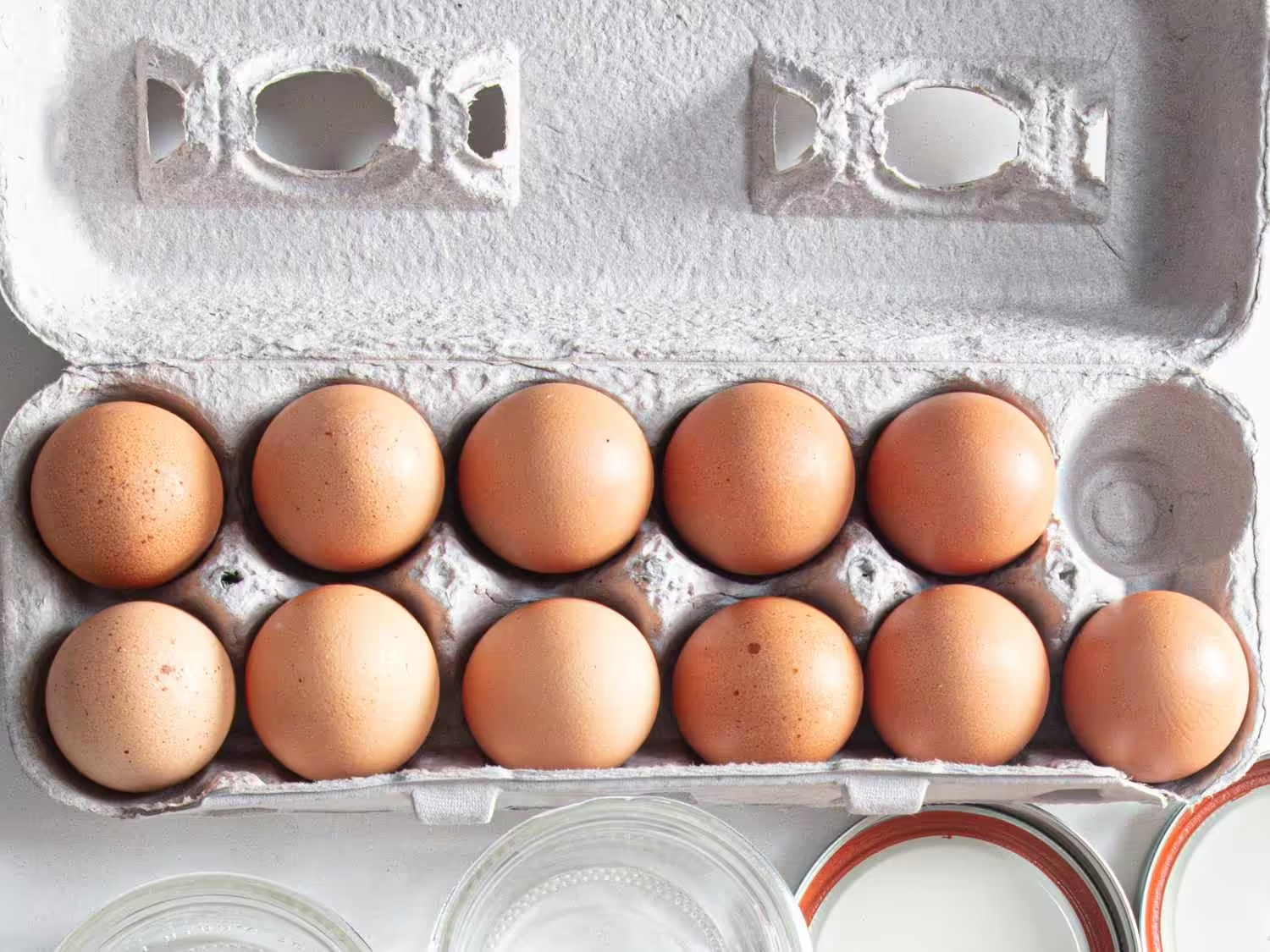
If you’ve been craving raw cookie dough or planning to knock back a dozen raw eggs before hitting the gym, you may want to think twice. Chickens on two Texas farms overseen by Midwest Poultry Services have tested positive for Salmonella, and the company voluntarily recalled nearly 1.6 million eggs sold across the South and Southwest on Wednesday, July 22.
No illnesses have been linked to the recalled eggs so far, and the company says it has stopped distributing eggs from the affected farms. Still, Salmonella can cause nausea, stomach cramps, diarrhea, vomiting, fever, and, in rare cases, death. To learn how to protect yourself and your family, I spoke with two food safety experts. Here’s what you need to know.
What Is Salmonella and How Does It Spread?
Salmonella is a rod-shaped bacterium that birds and poultry products, including meat and eggs, commonly spread. The strain behind this recall is Salmonella Enteritidis, one of the most common causes of foodborne illness in the United States.
The bacteria live in the intestines of infected animals and usually reach humans through contaminated eggs, meat, and other foods. You can also pick up Salmonella by touching raw or undercooked meat or eggs or contaminated surfaces, and, less commonly, through contact with another person. For example, an infected person who doesn’t wash their hands thoroughly after using the bathroom can pass the bacteria on while preparing food for someone else.
Diarrhea, stomach cramps, fever, nausea, and vomiting are the most common symptoms of Salmonella infection. The good news is that a healthy adult who gets infected usually doesn’t need medical care, though the illness is unpleasant. Most people recover within four to seven days. During that time, your main priority should be staying hydrated by drinking plenty of fluids and replacing lost electrolytes with oral rehydration solutions or beverages that contain sugars or salts.
Certain symptoms, however, call for medical care. A doctor should evaluate anyone with diarrhea and a fever, bloody diarrhea, or diarrhea lasting more than seven days, Dr. Timothy Brewer, professor of infectious diseases and epidemiology at the University of California, Los Angeles, tells me in an email. “Anyone who is showing signs of dehydration—confusion, lethargy, dark urine or no urine, dry mouth, low blood pressure, or tenting skin—should also be evaluated right away.”
It’s crucial to note that older adults, young children, and people with serious underlying conditions face a higher risk. Salmonella infections aren’t typically life-threatening, but they remain a leading cause of fatal foodborne illness in the United States. According to a 2025 report from the Centers for Disease Control and Prevention, Salmonella is “the leading cause of domestically acquired foodborne illnesses resulting in death.”
“Individuals with chronic medical problems such as atherosclerotic heart disease, kidney failure [requiring] hemodialysis, and immunocompromised persons should be evaluated by their doctor if they develop diarrhea that may be due to Salmonella,” Brewer says. “Parents of infants with diarrhea should call their pediatricians.”
Keep in mind that you can keep shedding Salmonella bacteria in your stool for several weeks after your symptoms resolve. During this time, wash your hands thoroughly with soap and water after using the bathroom, and avoid sexual activity that could expose others to the bacteria.
How to Know If Your Eggs Are Part of the Recall
The recalled eggs carry sell-by or best-by dates between July 20, 2026, and August 17, 2026. Their cartons also display the codes P-1950 or 0840962 and a Julian date code between 157 and 184, printed on the left or right side. The eggs went to Texas, Oklahoma, Louisiana, Arkansas, New Mexico, and Mississippi. Brookshire Grocery stores in all six states and Kroger stores in Texas and Louisiana sold the recalled eggs. Smaller retailers in the affected states may have sold them too.
What Should You Do If Your Eggs Are Affected by the Recall?
If you bought eggs affected by the recall, the Food and Drug Administration advises you not to eat them. Instead, return the eggs to the place of purchase for a full refund. If you have questions, call Midwest Poultry Services at 574-405-9531, Monday to Friday, between 8 a.m. and 4:30 p.m. Eastern Time.
Can You Tell if Your Eggs Have Salmonella?
Consumers can’t know whether their eggs carry Salmonella until the eggs make them sick, because contaminated eggs look, smell, and taste just like safe ones. Chickens and other birds infected with Salmonella can also look perfectly healthy. Inspectors and medical professionals typically test samples, such as stool, to determine whether a bird or person has a Salmonella infection.
What’s the Safest Way to Handle Eggs in the Kitchen?
Whether or not the current recall concerns you, food safety and consumer policy expert Darin Detwiler, a professor emeritus at Northeastern University, says you should always follow safe food-handling practices. “Buy eggs only from refrigerated displays, inspect cartons for cracked or damaged eggs,” he says.
As Serious Eats associate editorial director Megan noted in her guide to pasteurizing eggs, “Salmonella can be present on the shells of eggs as well as in the egg whites and yolks.” Cooking kills Salmonella, but if the pathogen is present in raw eggs, those who consume them “are at risk of contracting the foodborne illness salmonellosis,” which can cause “gastrointestinal distress, hospitalization, and even death.”
The CDC also recommends washing your hands before and after handling food, keeping raw eggs separate from other foods, and refrigerating eggs at or below 40°F (4.4°C). After handling raw eggs, wash utensils, kitchen counters, and cutting boards with hot soapy water.
Can You Cook Eggs Infected With Salmonella?
Cooking your eggs to 160°F (71°C) kills Salmonella, but if your eggs have been recalled, you should return them. If a recipe, such as those for Caesar dressing or eggnog, calls for raw eggs, it’s best to use pasteurized eggs. As Megan notes in her guide to egg pasteurization, pasteurization can greatly decrease the number of bacteria present “to a level at which the risk of causing illness is tolerably low from a public-health standpoint.”
Again, if you know your eggs have Salmonella, return or discard them, even if you planned to cook them thoroughly.
“While thorough cooking kills Salmonella, consumers should not view cooking as a way to ‘rescue’ recalled eggs,” Detwiler says. “A recall means the product should be removed from circulation. Even before cooking, contaminated eggs can spread bacteria to hands, utensils, countertops, refrigerators, and other foods through cross-contamination. The safest course is to return recalled eggs to the retailer or dispose of them according to recall instructions, then thoroughly clean and sanitize any surfaces that came into contact with them.”
Why Do Egg Recalls Happen?
Egg recalls happen when companies or government agencies identify products that may pose a risk to public health, either because people have become ill or because routine testing has detected contamination. In this case, the company’s proactive testing identified the Salmonella contamination, not because anyone became sick.
Detwiler says this recall seems unusually large, but it also shows that the consumer-protection safety net worked as intended. “It’s evidence that surveillance systems are identifying potential hazards before they become much larger public health crises,” he explains.
“The current egg recall feels unusually large, but that’s largely because of how today’s food system works,” he says. “A single producer can supply millions of eggs across multiple states under numerous brand names. When contamination is identified, the recall must match the scale of that distribution.”
At the same time, this recall highlights the importance of maintaining strong food safety systems at every level, especially amid the ongoing Cyclospora outbreak and massive funding cuts that have dismantled a big part of the existing public health infrastructure and made it harder to identify and track outbreaks.
“The timing of this recall, coming on the heels of the ongoing Cyclospora outbreak, understandably raises questions about the safety of our food supply,” Detwiler says. Unfortunately, outbreaks of foodborne pathogens aren’t uncommon, especially during the summer, when warmer conditions favor bacterial growth and people eat more fresh produce. “Trust in the food system depends not only on preventing outbreaks, but also on transparency, consistency, and credibility. Healthy skepticism is appropriate,” he says.
Detwiler stresses that healthy skepticism shouldn’t turn into cynicism or lead consumers to conclude that all foods are unsafe. Ultimately, it’s best to keep practicing good food safety habits and stay informed about recalls and alerts from trusted public health agencies. In this case, the company detected the Salmonella contamination before anyone became ill, and consumers can help prevent further infections by following the recall guidance.









Leave a Reply