

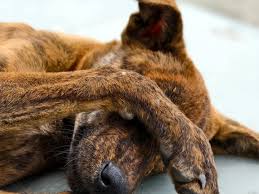
Picture a living room with six guests. Your dog greets five of them with a wagging tail, then plants himself in front of the sixth and lets out a low rumble. Everyone looks at you, and you start apologizing.
That reaction can feel random, even rude. Yet dogs rarely act for no reason, and their noses pick up a world of information we can’t detect. So what might they be sensing, and how much of the popular explanation holds up?
A Nose That Reads More Than Scent
A dog’s sense of smell is far more sensitive than ours. Dogs have many more scent receptors than people do, and a good share of their brain is devoted to processing odor. Where we notice a general smell of coffee, a dog may pick out the separate ingredients.
That matters here because human bodies give off a constant stream of chemical information. Sweat, breath, and skin all carry compounds that shift with diet, health, and emotional state. To a dog, a person isn’t just a face. They’re a layered scent profile that changes from moment to moment.
What the Research Actually Shows About Stress Odor
There is real science behind the idea. In a 2022 study from Queen’s University Belfast, published in PLOS ONE, trained dogs distinguished breath and sweat samples taken from people after a stressful task from samples taken when those people were calm. The dogs answered correctly in more than nine out of ten trials, which is striking.
An earlier Italian study, published in Animal Cognition in 2018, examined how dogs responded to sweat collected from people who had watched frightening or happy videos. Dogs exposed to the fear sweat showed more stress behaviors and faster heart rates, and they sought out their owners more. So dogs can detect stress-related odor, and it can change how they feel.
Why the Cortisol Story Is Only Part of the Picture
You’ll often see this explained as dogs smelling cortisol specifically. That’s a tidy story, but the studies don’t isolate one hormone. Stress changes a whole mix of volatile compounds, and researchers haven’t pinned down which ones dogs respond to.
The headline claim also goes a step further than the evidence. Showing that dogs can detect stress odor is not the same as showing that it causes growling at a particular visitor. That link is plausible, but nobody has demonstrated it as the main explanation for everyday growling.
Body Language Is Probably Doing Heavy Lifting
Dogs are exceptional readers of movement. A nervous person might stiffen, avoid eye contact, lean away, or approach too quickly. To a dog, those signals can look a lot like uncertainty or threat.
Smell and body language likely work together. An anxious guest smells different and moves differently at the same time, so it’s nearly impossible to separate the two in a normal living room. For this reason, researchers generally treat dog social perception as multisensory.
Past Experience, Looks, and Learned Associations
Dogs also remember. A dog with a bad experience involving a tall man in a hat may react to anyone who resembles that picture. A lack of early socialization with certain kinds of people, such as children, people with beards, or people using mobility aids, can do the same.
Other cues matter too. Some people wear strong perfume, smell of other animals, or carry the scent of a place the dog finds unpleasant, like a vet clinic. Voice pitch, loud movement, and even how someone stands in a doorway can all tip a dog toward caution.
Growling Is Communication, Not Misbehavior
A growl is information. It tells you the dog is uncomfortable and wants more space. Dogs that get punished for growling can learn to hide that warning, which may make them more likely to snap without any notice.
So the useful question isn’t how to stop the growl. It’s what the dog is trying to say. Fear, discomfort, guarding, pain, and overexcitement can all sound similar, and context helps you tell them apart.
What to Do When Your Dog Singles Someone Out
Start by giving the dog room. Let the guest ignore the dog rather than reach for him, and avoid forcing greetings. Treats tossed from a distance can help a dog link a person with something pleasant, though this works best at a pace the dog can handle.
If the growling is frequent, intense, or comes with snapping or lunging, talk to a vet to rule out pain, then to a qualified trainer or veterinary behaviorist. You can also coach nervous guests to relax, move slowly, and keep their hands to themselves. Calm people often get calmer dogs.
Final Thoughts
I think the stress sweat idea appeals to us because it flips the blame. The dog isn’t being rude, he’s being observant. That part I’d happily endorse, since a growl is nearly always a reason, not a flaw.
Still, I’d be wary of treating the sweat explanation as settled fact. The research supports that dogs can smell human stress, not that this is why your dog dislikes your brother-in-law. Treat the nose as one clue among several, listen to the growl, and give your dog the benefit of the doubt.






Leave a Reply