

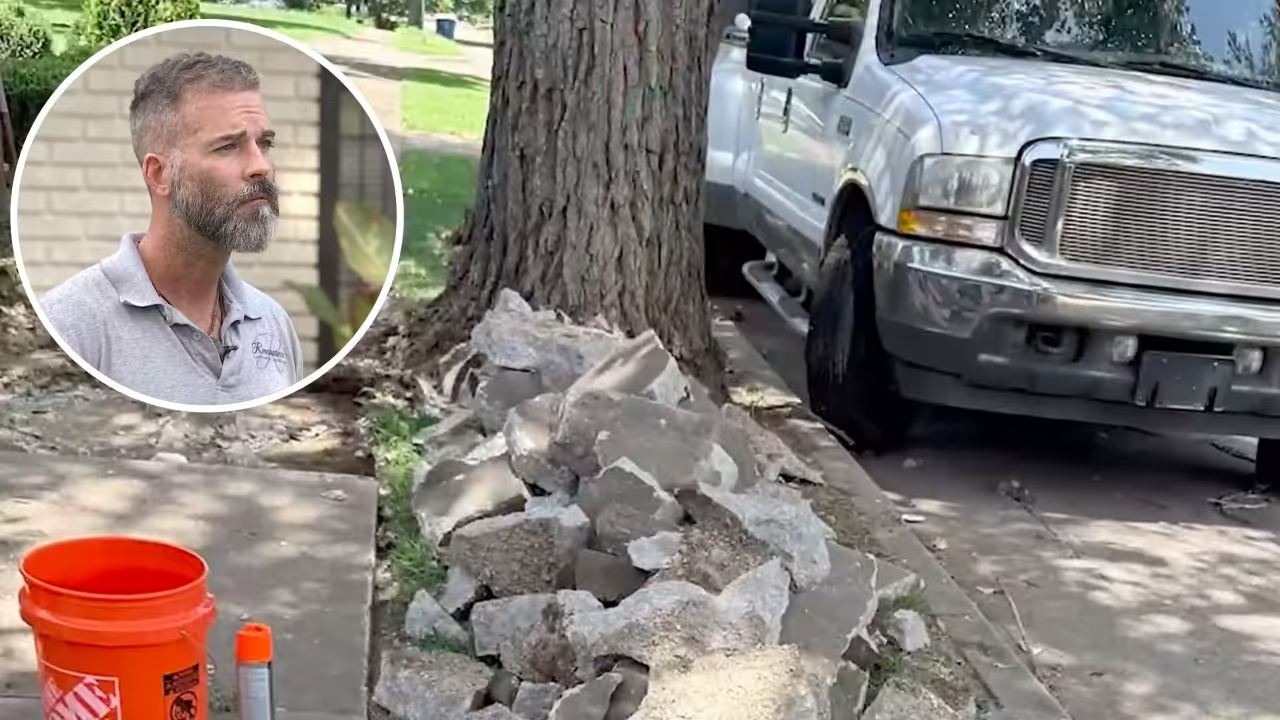
In Tulsa, a homeowner learned he was on the hook for fixing the sidewalk outside his house — or he’d face a hefty fine or even a prison sentence.
Jeremy Walker got a notice of violation telling him he had 14 days to repair the sidewalk outside his midtown home, or he’d face a fine of up to $1,200, imprisonment, or both.
“I was like, how is this my responsibility?” Walker told FOX23 Investigative Reporter Janna Clark of the buckling sidewalk, which he says is the result of a large tree. “I didn’t understand … We pay the city.”
He tried repeatedly to reach the city through both phone calls and emails, but got no answers. After two days, he went down to City Hall, where officials told him, point blank, that he’d need to remove the tree.
He told FOX23 that officials also told him he could potentially bear responsibility for replacing the entire stretch of sidewalk, not just the section surrounding the tree. Moreover, he’d need to obtain a $700 permit — which could take 60 to 90 days, long after his 14-day deadline would pass — before making any repairs.
Are sidewalks the responsibility of the city or homeowners?
Clark reviewed Tulsa city code and found that, indeed, sidewalks, walkways, stairs and driveways that serve private properties tend to fall under the responsibility of the owners of those properties. They must maintain and repair them.
“All sidewalks, walkways, stairs, driveways, parking spaces and similar areas shall be kept in a proper state of repair, and maintained free from hazardous conditions,” according to the City of Tulsa’s Rehabilitation Standards.
But the City of Tulsa reportedly told FOX23 that the 14-day compliance period serves as a “standard timeline” that encourages property owners to take action. As long as the city can see that a homeowner is doing just that, “that’s all [they] ask for,” the city said.
Nevertheless, Walker spent three days replacing the damaged sidewalk himself, removing the concrete and tree roots, and pouring and shaping fresh concrete around the tree — an endeavor that cost him an estimated $1,200 to $1,500 — sans permit due to concerns about the tight timeline. Fortunately, a city inspector approved it.
What to do if your sidewalks need care
A cracked or uneven sidewalk may look like the city’s problem, but in many U.S. communities, like Tulsa, the responsibility falls on the property owner whose land borders the sidewalk. The rules, however, vary considerably by city and state.
In New York City, for example, property owners generally must install, repair and maintain the sidewalk adjoining their property — even though the sidewalks themselves are owned by the city. And, if the Department of Transportation finds a hazardous condition, it can issue a sidewalk violation. Owners generally have 75 days to make the repair; if they don’t, the city can arrange the work and bill the owner, potentially placing a lien on the property.
Dallas takes a similarly strict approach. City code says an abutting property owner must repair a defective, unsafe or hazardous sidewalk at their own expense. After receiving written notice, an owner generally has 15 days to begin repairs and 30 days to complete them. Failing to comply counts as an offense.
But this isn’t a universal rule. Some cities assume more responsibility for sidewalks, while others divide maintenance duties between municipalities and adjacent property owners.
Homeowners shouldn’t assume that a sidewalk automatically falls under the city’s responsibility simply because it sits in the public right-of-way. You should search your local municipal code or transportation department’s rules to know exactly what you’re responsible for (or if you’re off the hook) — and how long you may have to fix any repairs you are indeed expected to foot.
It’s also a good idea to regularly inspect the sidewalk bordering your property for cracks, holes, raised sections and other trip hazards. And, if you receive a violation notice, don’t ignore it: Note the deadline, contact the appropriate city department, obtain any necessary permits and arrange repairs with a properly licensed contractor if required. Keep records and photographs showing that you’ve addressed the problem.
While jail generally isn’t the typical consequence for an ordinary sidewalk defect, ignoring a municipal order can potentially become an offense in some jurisdictions.







Leave a Reply