

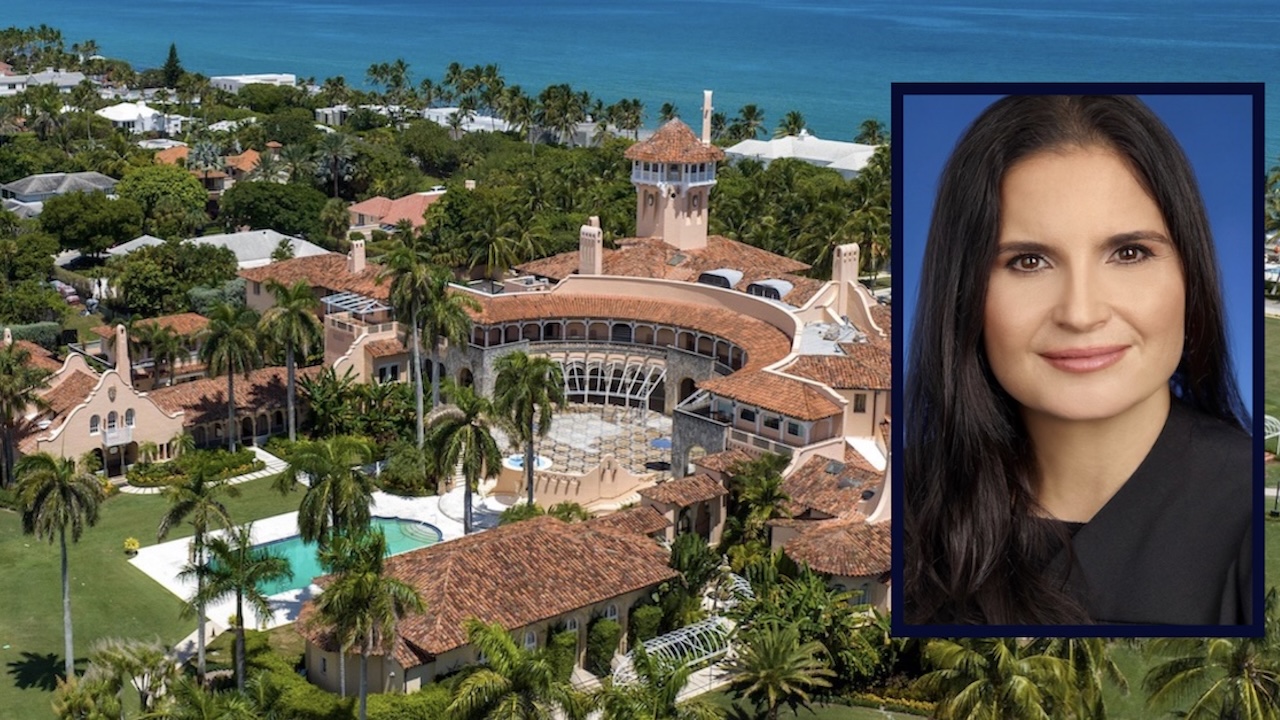
Current and former FBI agents have petitioned the judge who prohibited former special counsel Jack Smith from discussing his Mar-a-Lago report on President Donald Trump, requesting clarification on whether they may testify as part of the Department of Justice’s “grand conspiracy” investigation in Florida without facing legal repercussions.
The motion to intervene, first reported by Politico, asserted that federal agents and analysts “participated in the investigation and prosecution of” Trump, as well as the 2022 search of Mar-a-Lago, which resulted in his indictment in the classified documents and conspiracy case.
U.S. District Judge Aileen Cannon dismissed the indictment after determining that Smith had been unlawfully appointed as special counsel, characterizing him as little more than a “private citizen.”
The Trump-appointed jurist subsequently sealed Volume II of Smith’s report as a consequence of the dismissal, condemning Smith for his “brazen” decision to create the document in the first place.
After Cannon permanently barred the DOJ and then-Attorney General Pam Bondi “or her successor(s)” from “releasing, sharing, or transmitting Volume II of the Final Report or any drafts of Volume II outside the Department of Justice” or “otherwise releasing, distributing, conveying, or sharing with anyone outside the Department of Justice any information or conclusions in Volume II or in drafts thereof,” Smith faced severe restrictions on his ability to speak publicly about the classified documents case.
The intervenors, seeking to avoid a rebuke from Cannon for violating her injunction, requested clarification on how the order applies to them within the context of a grand jury subpoena.
“Absent clarification, Clients cannot testify before the grand jury without risking violating terms of the Order. DOJ has reportedly taken the position that any disclosure of nonpublic information that may be contained in Volume Two would violate the Order, even if such disclosure was made in response to congressional inquiry, in response to requests made under the Freedom of Information Act, or during privileged communications with counsel,” the filing stated.
“When counsel requested clarification of DOJ’s interpretation of how its investigation interacts with the Order, the government responded that its ‘work does not disturb [the] Order,’” the motion continued. “However, it did not elaborate nor provide any factual or legal basis from which it came to that conclusion.”
The FBI agents , “most” of whom “were unlawfully fired and are no longer federal employees” , expressed a general willingness to “voluntarily testify before the grand jury,” but declined to do so under the threat of “possible punitive consequences.”
“They are likely to be asked questions pertaining to information in Volume II of the report, which may or may not fall within the scope of the Order, forcing them to make the difficult choice between: (1) possible contempt of the Order; (2) not providing full, unconstrained testimony to the grand jury in order to comply with the terms of the Order; or (3) invoking their Fifth Amendment right not to incriminate themselves,” the would-be intervenors stated. “The first two options bear possible punitive consequences, while the third creates unnecessary negative optics for innocent former federal civil servants who are said to be witnesses yet may be perceived as withholding information simply due to the need to protect themselves from being held in contempt.”
“Although most were unlawfully fired and are no longer federal employees, Clients are deeply respectful of all court orders and do not wish to violate them,” the motion added.








Leave a Reply