

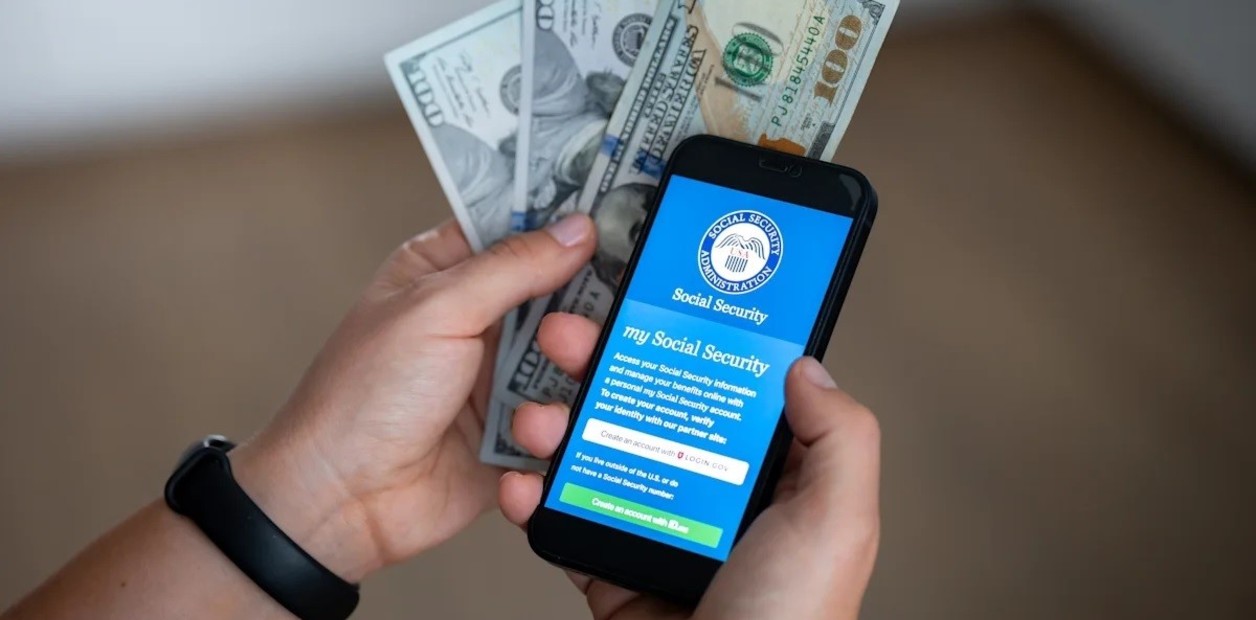
A balance held in a digital wallet counts as a resource for Supplemental Security Income, according to the Social Security Administration’s 2026 edition of its SSI resources summary. The summary lists digital currencies and money held in digital wallets alongside cash, bank accounts and stocks. The classification matters because SSI is a means-tested program with a hard ceiling of $2,000 in countable resources for an individual and $3,000 for a couple. A recipient whose countable resources exceed that line at the start of a month gets no payment for that month, so the category a balance falls into decides whether a check arrives.
Where a wallet balance sits in SSI’s definition of a resource
SSA’s summary defines resources as things a person owns, starting with cash, bank accounts, stocks, mutual funds and U.S. savings bonds. It extends the idea to other assets that could be converted to cash for food or shelter. That conversion test is the logic beneath the whole category. A wallet balance that can be spent or exchanged does the same job as money in a checking account, and the resources summary treats it that way. The digital-wallet entry applies the existing definition rather than creating a separate rule for new technology.
The listing answers whether a wallet balance is counted at all, and SSA’s own SSI resources summary says it is. The check that follows is simple arithmetic against a single figure. Wallet balances, cryptocurrency holdings, bank accounts and cash are added together, and the total is compared with $2,000 for an individual or $3,000 for a couple. The summary sets no lower threshold for digital holdings and grants no exemption to a wallet because it sits outside a bank.
The SSI & Disability Action Kit is built around the question of whether a wallet balance pushes a household’s total over the line. It sets the 2026 SSI income and resource limits beside an income and resource organizer for adding up what counts.
How the operating manual values virtual currency
Program Operations Manual section SI 01140.208, revised July 5, 2023, spells out the mechanism. It covers virtual currencies and other digital tokens. The manual defines a convertible virtual currency as one with an equivalent value in traditional currency that can be traded, used for purchases or exchanged into U.S. dollars, with Bitcoin as the example. Such a currency counts as a resource when retained, beginning the month after the month of receipt, and SSA treats it as a liquid resource for development and documentation purposes.
Valuation follows a snapshot rule. The manual values convertible virtual currency at its U.S. dollar exchange value as of the first moment of the month. SSA therefore works from the price at that instant, not an average across the month or the price on the day of any later sale. A holding that moves sharply after the month begins does not change that month’s count, and the next month brings a fresh reading. Volatility matters at only one point in the calendar.
The manual sorts digital tokens by what they can do. A fungible token is interchangeable with an equivalent token and divisible into smaller units. A non-fungible token signifies ownership of a unique property that cannot be divided. An NFT counts if it can be sold for convertible currency or legal tender. It carries the same first-moment valuation and is presumed nonliquid absent evidence to the contrary. Section SI 01110.300 defines liquid as cash or anything convertible to cash within 20 workdays. In-game currency and non-transferable digital content are excluded because they cannot meet food and shelter needs.
What stays outside the $2,000 and $3,000 limits
The dollar figures are statutory. Section SI 01110.003, last revised December 17, 2024, states that an individual or couple with countable resources above the limit is not eligible for federal SSI. It gives the limits as $2,000 for an individual and $3,000 for a couple, in effect since January 1, 1989. The manual section read for this article describes no yearly adjustment, so the same ceiling applies to a wallet balance in 2026 as to a savings account.
The resources summary also lists what SSA leaves out of the count: the home a person lives in, household goods, one vehicle regardless of value, life insurance with a face value under $1,500, burial spaces and burial funds, PASS accounts, educational grants for nine months, certain trusts, and ABLE accounts up to $100,000. A wallet balance appears on none of those lists. The contrast with an ABLE account is the sharpest in the set, since both can hold spendable money and only one carries an exclusion written into the rules.
Crossing the line has a monthly, mechanical consequence. Under the summary, a person whose countable resources exceed the limit at the beginning of a month cannot receive SSI for that month. Someone who is trying to sell the excess resources may receive conditional benefits, with repayment owed once the sale is complete. Liquidity enters here, since SSA’s manual says it bears on exclusions and on conditional benefit determinations, and convertible virtual currency is treated as liquid. The sources read do not say how a conditional payment would apply to a wallet balance specifically.
Reporting wallet balances to SSA each month
The free official route is Social Security itself. SSA’s SSI page states that recipients must report wages, other income and changes to resources or living arrangements each month. It links to the agency’s reporting instructions, a field-office locator and a contact page. A wallet balance is a resource, so a balance that rises, falls or is converted to cash belongs in that category of reportable change. Recipients handle it through the same channels as a bank balance.
The first-moment valuation rule shapes which records are useful. For a wallet that holds cryptocurrency, the relevant number is the holding priced in U.S. dollars at the first moment of the month under review. A month-end screenshot does not capture that. For a wallet that holds a dollar balance, the balance at the start of the month is the figure that sits beside bank accounts and cash in the total. Records that fix the date and time of the reading answer the question SSA’s manual asks.
The record does not settle where the term itself ends. SSA’s summary says money held in digital wallets counts, yet the pages read for this article do not define a digital wallet. Whether the entry reaches a payment-app balance, a cryptocurrency wallet or both is not stated there. The manual’s detailed valuation rule is written for convertible virtual currency and tokens, and no wallet-specific valuation rule appeared in the sections read. That leaves the resources summary and the first-moment rule as the two fixed points.
Recipients tracking balances against the first-of-the-month reading can turn to The SSI & Disability Action Kit. It pairs its review and reporting steps with an income and resource organizer that keeps each month’s totals in one place.






Leave a Reply