

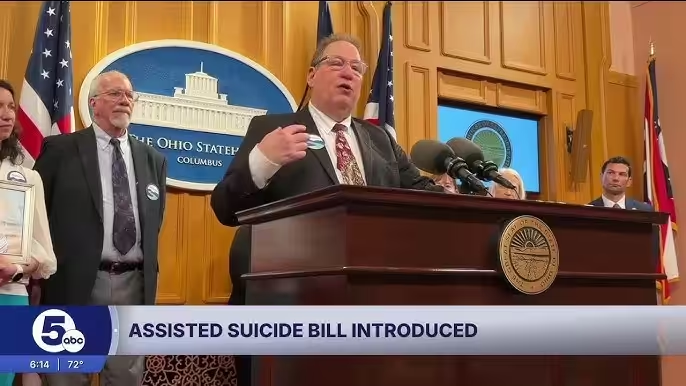
Rep. Eric Synenberg (D-Beachwood) has introduced a bill at the Ohio Statehouse that would allow doctors to prescribe life-ending drugs to terminally ill patients — drugs that supporters describe as delivering a painless and peaceful death.
The Medical Aid In Dying Act draws support from advocates at Ohio End of Life Options, including Columbus attorney Michael Oser, who backs the bill for deeply personal reasons.
“I have terminal cancer. I don’t know the date of my death, but I want to make that determination of how I die and where I die,” Oser said. “This bill trusts Ohioans, trusts people like me, to make the ultimate decisions consistent with our beliefs, our family values, our heritage and our faith.”
The bill establishes strict safeguards. At least two physicians must confirm that the patient has six months or less to live and is mentally competent to voluntarily request and self-administer the life-ending drug combination. The patient must also submit three separate requests for the prescription — two verbal and one written before witnesses — with mandatory waiting periods between each request.
“We understand that some individuals may have moral or religious objections to this issue,” Synenberg said. “This legislation respects that. No individual, provider, or facility is required to participate and no one can be compelled to act against their own personal or religious beliefs.”
The American Medical Association opposes physician-assisted death but permits its members to participate in states where the law allows it. Thirteen states and the District of Columbia currently permit some form of voluntary, medically-assisted death for terminally ill patients.
Ohio has seen this debate before. Eight years ago, Sen. Charleta Tavares (D-Columbus) introduced similar legislation in the Ohio General Assembly — a bill that stalled after an initial committee hearing and never moved forward. History may repeat itself. Sen. Steve Huffman (R-Tipp City), who chairs the Senate Health Committee, has already announced his opposition to Synenberg’s bill and said he would urge House and Senate colleagues to block it.
“Medical Aid in Dying, otherwise known as Assisted Suicide, directly contradicts thousands of years of medical practice and religious ethics. It is morally wrong to avoid a natural death,” Huffman said in a statement. “For the government to allow such a practice means that it is no longer trying to protect and help the less fortunate but actively destroying them.”
Ohio Right To Life, the anti-abortion advocacy group that fought Tavares’ 2018 bill, opposes Synenberg’s measure as well. Executive Director Carrie Snyder questioned whether a terminally ill patient can genuinely consent to medically-assisted death.
“They might be voluntarily, on its surface, pursuing this process, but what’s really behind it is they’re feeling that they’re a burden to their family,” Snyder said.
Snyder also raised concerns about the drug combination typically prescribed for patients to self-administer — a mix of powerful sedatives and paralytics.
“Once that prescription leaves the pharmacy or leaves the doctors’ hands, we actually don’t know what happens to it,” Snyder said. “The patient takes it home, it could sit in their medicine closet for six months and them not use it right away, it could fall into other people’s hands.”
Despite the strong resistance he anticipates from the legislature, Synenberg says he wants the bill to open a broader conversation about the practice in Ohio as more states across the country embrace it.
“Let us allow people from all perspectives to come to committee and testify and be part of this conversation,” Synenberg said. “At the end of the day, this is one of the most personal decisions a person will ever make. It is a decision shared between them, their faith, their loved ones and their medical providers. The question before us is whether we trust Ohioans to make that decision for themselves.”







Leave a Reply