

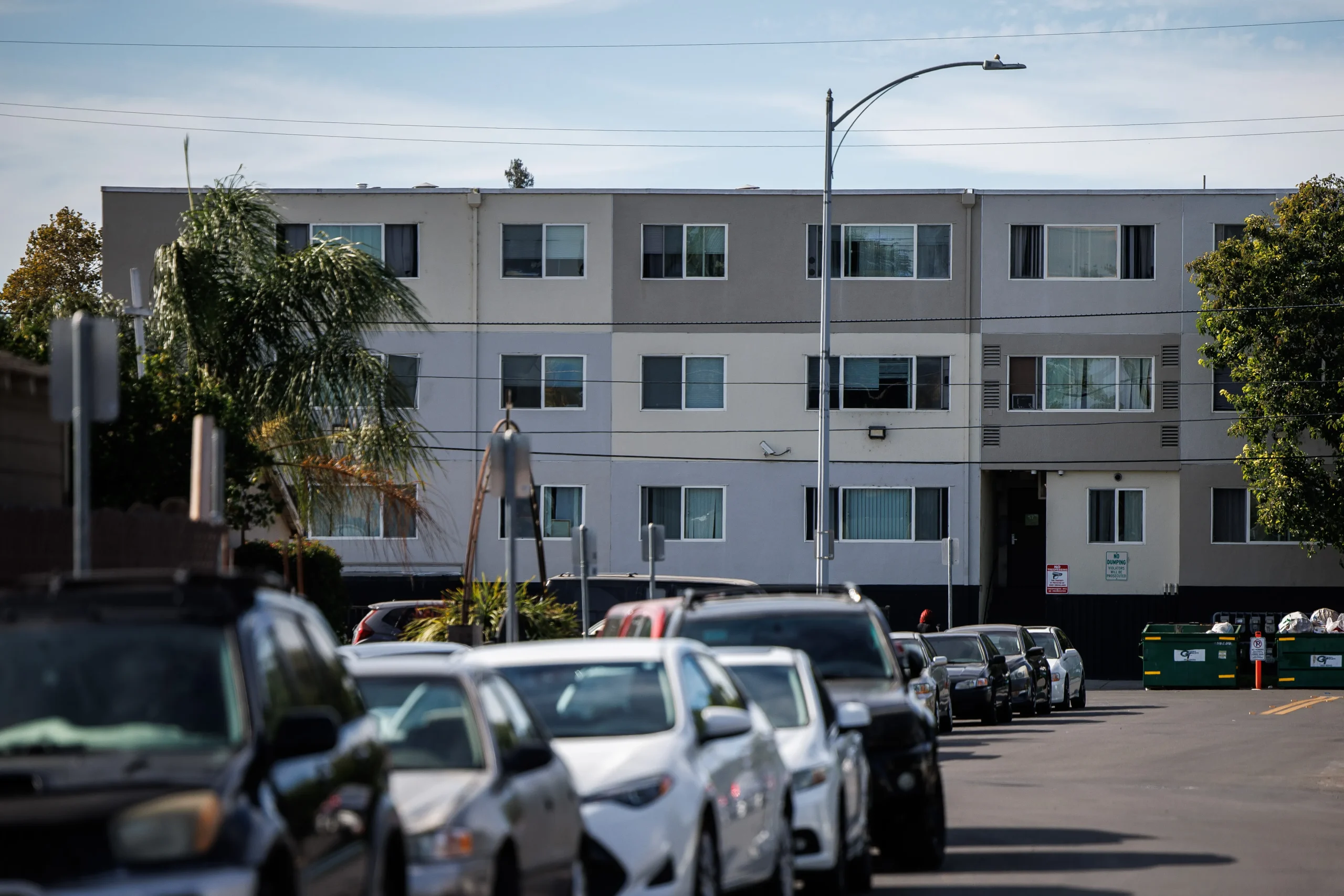
At Sunset Square Apartments, a 96-unit affordable housing complex in East San Jose, about a quarter of households earn more than the property’s income limits. Two households make over $300,000 annually, yet each has paid roughly $1,800 a month for a one-bedroom apartment — nearly $1,000 less than the city’s median rent for similar units.
The property, built with support from a combination of taxpayer-funded subsidies, is not an isolated example.
A San Jose auditor’s report from June found that nearly 1 in 8 units in a sample of 878 city-subsidized apartments across 10 properties were occupied by over-income tenants. Separate audit reports show the issue also affects other California cities, although the state does not track how many households exceed income limits.
The reports did not identify the over-earning tenants and made no allegations that renters or property operators broke laws or deliberately violated lease agreements. Government-subsidized affordable housing generally serves tenants who demonstrate earnings below a certain percentage of a region’s median income.
In most cases, public officials and property operators said tenants exceed income limits only after moving in. Local, state and federal rules typically allow those households to remain indefinitely, often while continuing to pay below-market rents. The policy aims to avoid penalizing upward mobility while recognizing that even tenants with higher earnings may struggle to afford market-rate housing.
Many operators also choose not to remove tenants, officials said, while regulators often have limited authority to require households to continue meeting income caps — a limitation the audit acknowledged.
The situation has sparked concerns among some operators and state officials about whether crucial housing subsidies are being used effectively to help those facing the greatest pressure from California’s crushing rents and severe affordable housing shortage. Despite recent progress by some cities in adding low-income homes, the state still faces a shortage of more than 1.2 million affordable rental units, according to the nonprofit California Housing Partnership.
When over-income tenants remain in affordable units, they can “take away valuable housing stock and hinder the economic ladder of housing,” said Concord state Assemblymember Anamarie Ávila Farías. She has authored a new bill designed to make it easier for operators statewide to remove renters who earn significantly above income caps.
Outside San Jose, a Los Angeles city controller’s report last year found that 13% of affordable properties failed to comply with income or rent limits, mirroring findings from the San Jose auditor’s sample. In Sonoma County, a civil grand jury found in 2022 that the county lacked adequate income monitoring after a whistleblower accused a prominent developer of ignoring income restrictions.
Affordable housing programs typically set income limits based on a percentage of an area’s median income. These programs aim to ensure households spend roughly 30% of their income on housing, although that does not always happen in practice.
At Sunset Square Apartments, most units have an income cap set at half the local median income, meaning a couple earning $80,000 annually would qualify, according to federal guidelines. The maximum rent for a one-bedroom unit is about $1,900. By comparison, the median rent for a one-bedroom apartment in San Jose stands at $2,725, according to data from online rental site Apartment List.
At Sunset Square and similar properties, the maximum rent remains based on a tenant’s income when they move in, even if their earnings later increase. However, the rent ceiling rises incrementally in most years.
As a result, as long as an over-income tenant keeps paying rent, “the property doesn’t have a strong incentive to move that individual out,” said San Jose Housing Director Erik Soliván.
Property operators also cited California’s strict tenant protection laws as a factor that makes it difficult to remove renters solely because they exceed income limits.
“Everybody’s operating under the state regulations and fair housing (laws), and that’s what’s happening,” said Mark Mikl, executive director of San Jose nonprofit Charities Housing, which manages Sunset Square.
To make more affordable units available to those who need them most, Ávila Farías’ bill — now awaiting Gov. Gavin Newsom’s signature — would create “good cause” for removing many tenants whose incomes exceed 140% of the local median income. Operators could remove those tenants once their leases expire.
However, the bill does not require operators to take action. It would also apply only to properties made up entirely of affordable units that receive federal tax credits, one of the most commonly used subsidies for affordable housing construction. Ávila Farías could not say how many units statewide the measure would cover.
At Sunset Square, which appears to qualify under the bill, operators said about 22 households currently exceed income limits, including the two two-person households earning more than $300,000 annually. Charities Housing said, however, that all of those households met the income requirements when they initially signed their leases.
A 2025 document listing every tenant’s rent and income, which the nonprofit submitted to San Jose officials and was obtained through a public records request, shows that households in all 93 occupied units had qualifying incomes when they moved in. According to an analysis of the document by this news organization, at least 11 households appeared to report six-figure incomes that exceeded annual income limits by at least $30,000.
Charities Housing said no public agency has attempted to force the organization to remove over-income tenants.
The nonprofit declined to make the two households earning more than $300,000 available for interviews or share details about their incomes or employment, citing privacy concerns.
Charities Housing did not answer whether it would consider declining to renew leases for over-earning households if Ávila Farías’ bill becomes law. However, during an interview, Mikl, the nonprofit’s director, said he hopes over-income tenants would voluntarily choose to leave.
“When people are successful,” he said, “we would like to believe that they would give that opportunity to the next family.”










Leave a Reply