

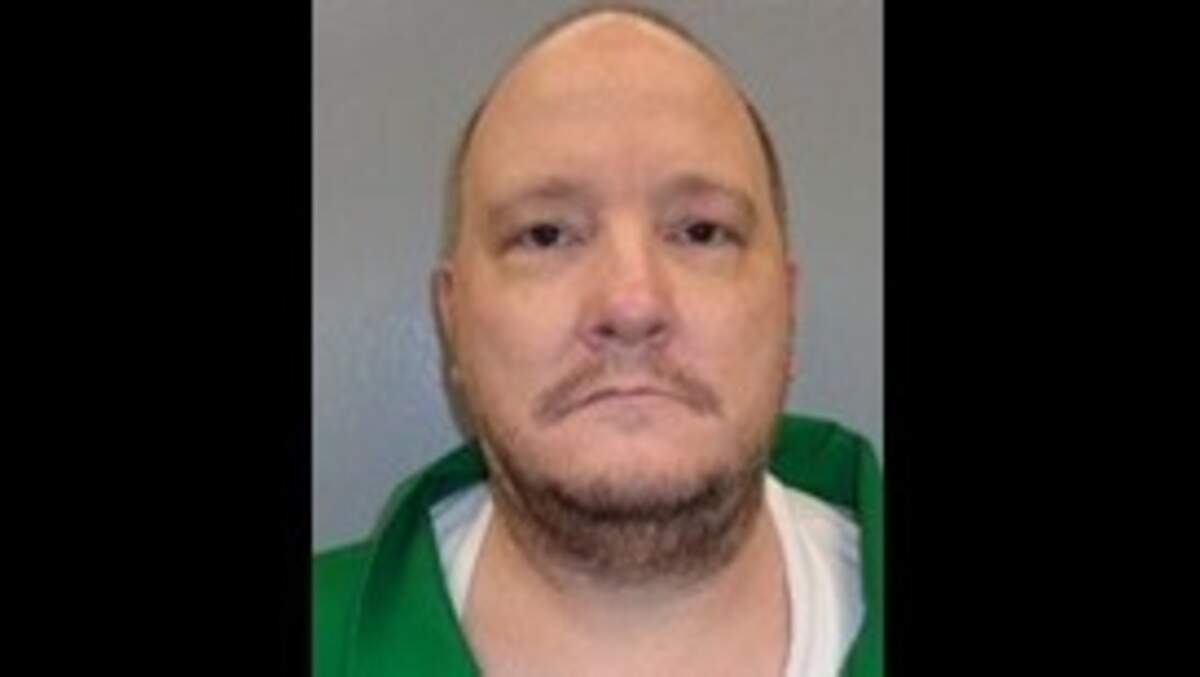
South Carolina prison officials have pushed back against a lawsuit filed by a Rock Hill death row inmate who killed his parents, arguing that prisoners cannot choose their medical providers or dictate which prescription medications they receive while incarcerated and awaiting execution.
James Robertson, 52, has remained on death row since 1999 for killing Terry and Earl Robertson as part of a scheme to obtain more than $2 million. After saying last year that he wanted to be executed following decades of unsuccessful appeals, Robertson reversed course a few weeks ago and filed a federal lawsuit against three top officials with the S.C. Department of Corrections.
The lawsuit claims prison officials violated his constitutional rights by refusing to provide the mental health medications he wants and by assigning him different counselors.
In a response filed Tuesday in U.S. District Court, prison officials rejected those claims, arguing that Robertson cannot determine which medications he receives or choose the person who provides his mental health care.
Robertson’s claims “run head-long into a mountain of controlling authority that holds an inmate’s disagreement with a treatment plan or an inmate’s dissatisfaction with the overall quality of mental health treatment he receives from a prison does not amount to a constitutional violation,” lawyers for the prison system wrote.
The lawsuit also shows that Robertson continues to receive mental health treatment, as he has throughout his 27 years on death row, prison officials said. They acknowledged that the treatment is not what Robertson wants.
The lawsuit “confirms that Plaintiff is receiving constitutionally adequate mental health care at SCDC,” according to prison officials.
Claims of ‘cruel and unusual punishment’
Robertson claimed in his lawsuit that denying him specific medications and failing to provide him with a consistent mental health counselor amounts to “cruel and unusual punishment.”
He has asked a federal judge to require prison officials to create a new medication plan and provide him with consistent counselors.
Robertson named prisons director Joel Anderson, Lydell Chestnut, the director of the Broad River prison in Columbia where death row inmates are housed, and the prison system’s chief of psychiatry, Andrew Hedgepath, as defendants.
In a response filed by attorney Daniel Plyler on behalf of the three prison officials, they said Robertson receives the same Seroquel mood-altering medication he requested.
However, prison officials said they prescribe only the extended-release form of the drug, rather than the instant-release version Robertson says he has a right to receive and has taken in the past.
Prison officials also said inmates cannot choose their preferred counselors while housed on death row at Broad River prison in Columbia.
“An inmate does not have a constitutional right to see a medical or mental health provider of his choice,” prison officials said in the court filing.
“The Eighth Amendment guarantees access to adequate mental health care, nothing more. It does not guarantee full access to a specific provider, and it does not guarantee access to a specific provider on a repeated basis.”
Almost 30 years of spotlight on Rock Hill murders
Robertson’s case drew national attention after his parents were killed around Thanksgiving in 1997.
Robertson, once a star student and Boy Scout, attempted to make the killings appear to be a robbery that had turned violent. He used his father’s credit card while fleeing by car to Pennsylvania, where authorities arrested him hours after his parents’ bodies were found.
The 1999 trial took place at the Moss Justice Center in York and aired nationwide on Court TV. National media outlets also covered the case.
A jury convicted Robertson of double murder, armed robbery and financial card fraud before sentencing him to death.
Why hasn’t Robertson been executed? South Carolina re-started executions in late 2024 after more than a decade without any.
Robertson’s appeals have gone on for most of the past three decades.
There are now two federal lawsuits keeping Robertson from being executed.
The first lawsuit was filed by Robertson in federal court in 2011, claiming that he was being held illegally in prison. That case remains pending under a judicial stay of execution order.
It was in that lawsuit that The Herald exclusively reported last year that Robertson had written to a judge saying he wanted to drop the case and be executed. His lawyers then argued that he lacked the mental capacity to make the decision to die.
Earlier this year, a federal judge ordered secret mental health hearings in that lawsuit. The mental health records remain sealed under the judge’s order.
The lawsuit over Robertson’s medications and mental health care providers must also be resolved before he can be executed.
The Herald contacted the lawyer representing the prison officials and Robertson’s two attorneys in the medical lawsuit but had not received a response or statement.



Leave a Reply