

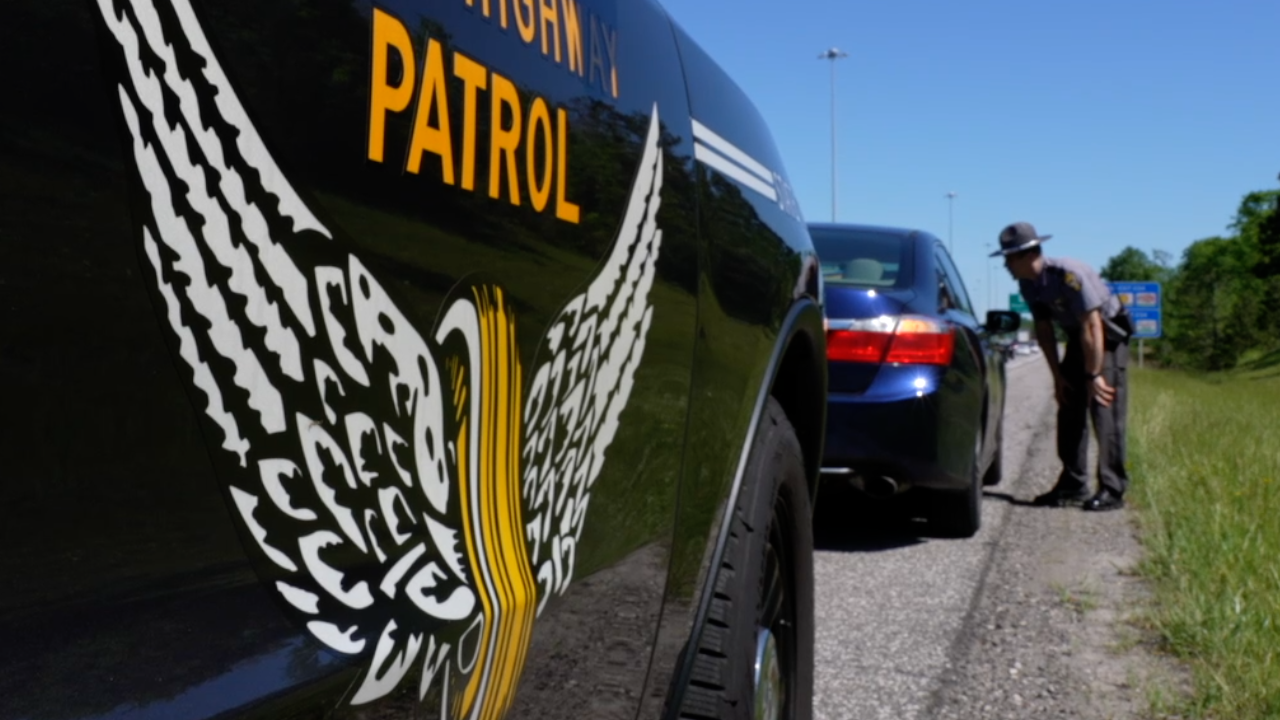
COLUMBUS, Ohio — Police could now jail Ohio drivers and passengers who refuse to identify themselves during traffic stops.
Gov. Mike DeWine has signed a bill into law that increases penalties for not identifying yourself to law enforcement. The new regulations take effect in early October.
When state Rep. Cindy Abrams (R-Harrison) worked on the Cincinnati police force, she said she faced a difficult traffic stop.
“The passenger, who was smoking a joint at the time … We get him out of the car and he was giving us all kinds of different names,” Abrams said.
Once she got him to the station, officers took his fingerprints.
“Well, lo and behold, the jail called and said, ‘Guess what? Congrats, you caught a murderer,'” she said. “He was wanted for murder out of Akron.”
State Rep. Sharon Ray (R-Wadsworth) and Abrams sponsored House Bill 492. The bill mainly passed along party lines, but eight Democrats joined the Republicans in supporting it.
“House Bill 492 provides our law enforcement with an extra tool in the toolbox as they work to keep our community safe,” Abrams said.
Right now, noncompliance can lead to an unclassified misdemeanor, which could mean community service. The new law would make it a fourth-degree misdemeanor, carrying up to 30 days in jail and a fine of $250.
And if the officer has reasonable suspicion that a passenger has committed a traffic violation crime under Title 45, like not wearing a seat belt, the law would also require them to share who they are, or else they face the same punishment.
“There’s a lot of ambiguity in this particular piece of legislation,” state Rep. Cecil Thomas (D-Cincinnati) said.
Thomas, a retired police officer, said the law doesn’t clearly specify all the charges officers can bring against a passenger.
“I’m afraid we’re gonna be opening our doors for municipalities to be getting lawsuits,” Thomas said. “There’s gonna be some constitutional issues.”
He also worries about how officers may use this law, with some critics arguing that it could strengthen racial profiling or immigration stops.
“That opens the door for a whole other discussion as it relates to arrest, search and seizure, the detaining of the individuals,” he said.
This law isn’t meant to target people, Abrams argued, but just to give law enforcement more options in catching possible suspects.
“House Bill 492 gives our police and prosecutors the ability to choose which offense applies for each case,” she said.
This law takes effect in the fall and makes it even more important to carry your ID with you wherever you go. The provision gives officers the authority to add an additional penalty if you don’t have your license.
“I’m grateful to the governor for signing this bill into law. As a former Cincinnati police officer, I’m confident this law will increase the safety of our law enforcement during lawful traffic stops. It’s critical they know who they are interacting with,” Abrams said Thursday.
Although the identification requirement formed the main part of the legislation, the bill also expands the offense of interfering with an arrest, increasing the penalty to a second-degree misdemeanor.






Leave a Reply