

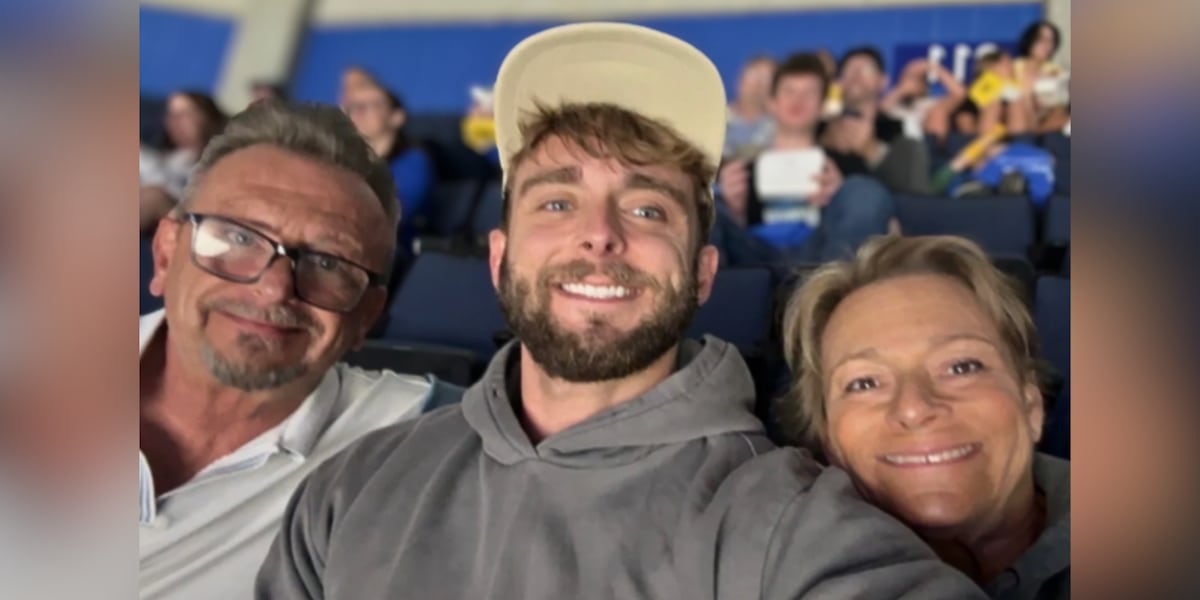
A South Carolina couple is urging state and federal legislators to impose stricter regulations on over-the-counter products following the death of their son, who authorities determined died after consuming a legally purchased substance.
Robert and Dana Knox described their 29-year-old son, Micah Knox, as a man whose warm smile and outgoing nature left a lasting impression on everyone he met. “Everywhere he went, he made people smile,” Robert Knox said. “He was kind of like the life of the party when it went on, because he’s always had that sense of humor. And he was very likable.” Dana Knox added that many people referred to her son as “a ray of sunshine,” recalling how he worked in Asheville at a facility serving teenage girls recovering from eating disorders. Several of those young women later contacted Dana Knox to tell her that her son had helped save their lives. “If somebody was depressed, he always cheered them up,” she said.
Despite his bright demeanor, Micah Knox endured a long struggle with substance abuse, a battle he actively worked to overcome in the months before his death. “He did struggle with it,” Dana Knox said. “But he wanted to be sober so bad. At the time of his death, he had been sober for nine and a half months. And he was very, very proud of that. And we were too. Because I knew he wanted to be sober. He wanted to have a good, productive life.”
The couple maintained a daily phone call with their son to monitor his well-being. On June 26, Micah Knox failed to answer. “When I couldn’t reach him, I knew something was wrong,” Dana Knox said. “At that point, I thought he had just relapsed.” Law enforcement officers later discovered Micah Knox unresponsive in his bed. Investigators classified his death as an accidental overdose.
When toxicology results arrived, the findings unsettled his parents. Robert Knox expected the report to confirm fentanyl contamination, but the tests revealed no such substance. “I’m sure it was laced with fentanyl or he’s got something in his system,” he said. “But there was nothing. And that’s what was really hard because we knew that he didn’t think it was going to kill him.” Laboratory analysis instead identified mitragynine, the primary psychoactive compound in kratom, now sold in concentrated forms marketed as 7-OH gummies and tablets.
The product remains legally accessible to adults over the age of 21 in numerous states, including South Carolina. Retailers stock the items at gas stations and smoke shops without restriction. “You can buy the stuff right over the counter, you know, at most gas stations and any smoke shop,” Robert Knox said. “So it’s definitely not one thing that he was thinking it was going to kill him. No, there’s just no way that we believe that.”
The Drug Enforcement Administration reports a steady rise in kratom-related fatalities. The agency’s toxicology testing program detected mitragynine in 51 overdose cases between 2025 and April 2026. Dana Knox expressed alarm over the lack of public awareness surrounding the compound. “We’re so concerned about fentanyl, which, yes, I am too. And heroin,” she said. “But this is like silent. This is the silent fentanyl that’s out there right now. People think it’s not that big of a deal. It’s natural. Don’t think that.”
Jacob Jackson, chief chemist for laboratory services at the Spartanburg County Drug Crime Lab, identified kratom as his most pressing concern, surpassing both methamphetamine and fentanyl. “I think the big one right now is kratom. Kratom products,” Jackson said. “For right now, that bill’s stalled. We’re not going to get an answer until the next legislative session next year, unless there’s an emergency scheduling. So, hopefully that kratom issue is dealt with, because it is dangerous.”
South Carolina legislators failed to advance a bill that would have regulated mitragynine concentrations in 7-OH products. No comparable federal action has moved forward either. Dana Knox said she has reached out to lawmakers seeking clarification and support but has not received a response. “It didn’t matter that he was in recovery or that he was an addict; he still lost his life to something that should not have killed him,” she said. “I want people to understand that he was a human being and he didn’t deserve to die from something that he bought at a gas station.”
Robert Knox emphasized that tighter controls on mitragynine could prevent thousands of deaths and called for bipartisan cooperation. “This drug don’t belong to a party,” he said. “It’s killing everybody. Doesn’t matter. Democrat. Republican. Independent. If you’re doing it, it’s going to eventually catch up. And so we need to come together.”
Although Dana Knox has yet to hear back from the state and federal officials she contacted, she remains committed to advocacy in her son’s memory. The Knox family is also collaborating with legal counsel to pursue action against the manufacturers of 7-OH. The family’s stated objective is to hold distributors accountable and remove the products from store shelves across the country. “I want his legacy to be that good people can win,” Dana Knox said. “And we’re going to win this one. We will. I’m going to make it. We have to. And if all of us moms out there can get together and try to stop this, get the word out. We can move mountains. Let’s do it.”





Leave a Reply